PRACTICAL RISKS OF RIG MOVING Brief Presentation Synopsis
- A Rig move Master’s Perspective-case
study
- Pro-active Measures with industry intelligence
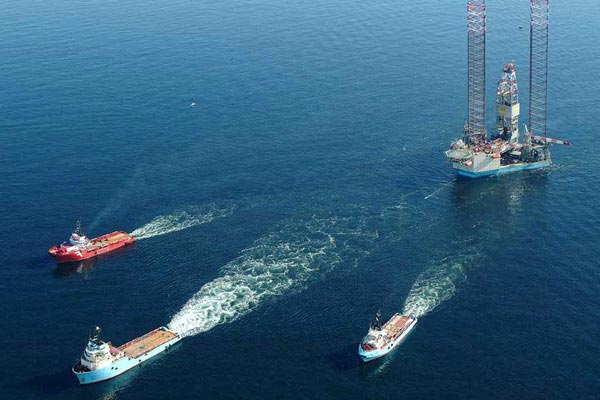
- RELOCATION OF A JACK-UP DRILLING UNIT – CASE STUDY ON
RIG MOVE
- The intended purpose of the operation was to relocate
the jack-up drilling unit from an open sea location to a
port for lay-up. The distance was about 300 nm and the season
was winter but the port lay in a location where as the tow
progressed towards it, the weather would improve due to
change in latitude. The unit was refloated and the tow commenced.
- The Problem Starts…….
- The owner instructed the rig mover to order the tugs to
make for the new location. The original certificate of Approval
(C of A) for the voyage no longer applied and the warranty
survey (WS) company advised the owner of this fact.
- Original C of A was for a move classed as “an extended
field move”, lower than the now contemplated “ocean move”.
- CONSEQUENCES
- Tow ran into a series of heavy gales, severe strains on
the tow gear parted first one then the other towline.
- Suffering structural damage in way of the hull where the
legs passed through.
- Began to take green seas on deck which broke the lashings
on cargo.
- Equipment broke ventilators and hatches resulting in down
flooding, loss of power and pumping ability.
- The barge was now in serious trouble and sinking.
- The crew were removed by helicopter in a remarkable display
of seamanship before the unit sank.
- The unit underwriters did not pay the full insured value
of the unit due to the negligence of the owner and the warranty
survey company.
- Assessment of intact stability criteria
- Assessment on dynamic effects on stability & water impact
loads
- Establishing the final distances and criteria for jack-up
- Maneuvering in close proximity of platforms
- Guidance on fatigue of jack-up rigs during towing
- Detection of water ingress in floating condition
- Continuous and better dialogue between weather prediction
service providers.
- The starboard leg has punched through. By jacking down
the hull on the Port side, the Starboard leg will be able
to move within the crater it has made. If binding should
occur in the guides of the Port leg then this can be relieved
by raising the Starboard leg allowing the weight of the
barge on the low side to be taken by buoyancy.
- If the Starboard led is driven down to try and raise the
low side, the result will be to force the Port leg hard
into its guides thus moving the hull to Port. Because the
port leg is restrained, severe bending could occur at or
near the mud line.